
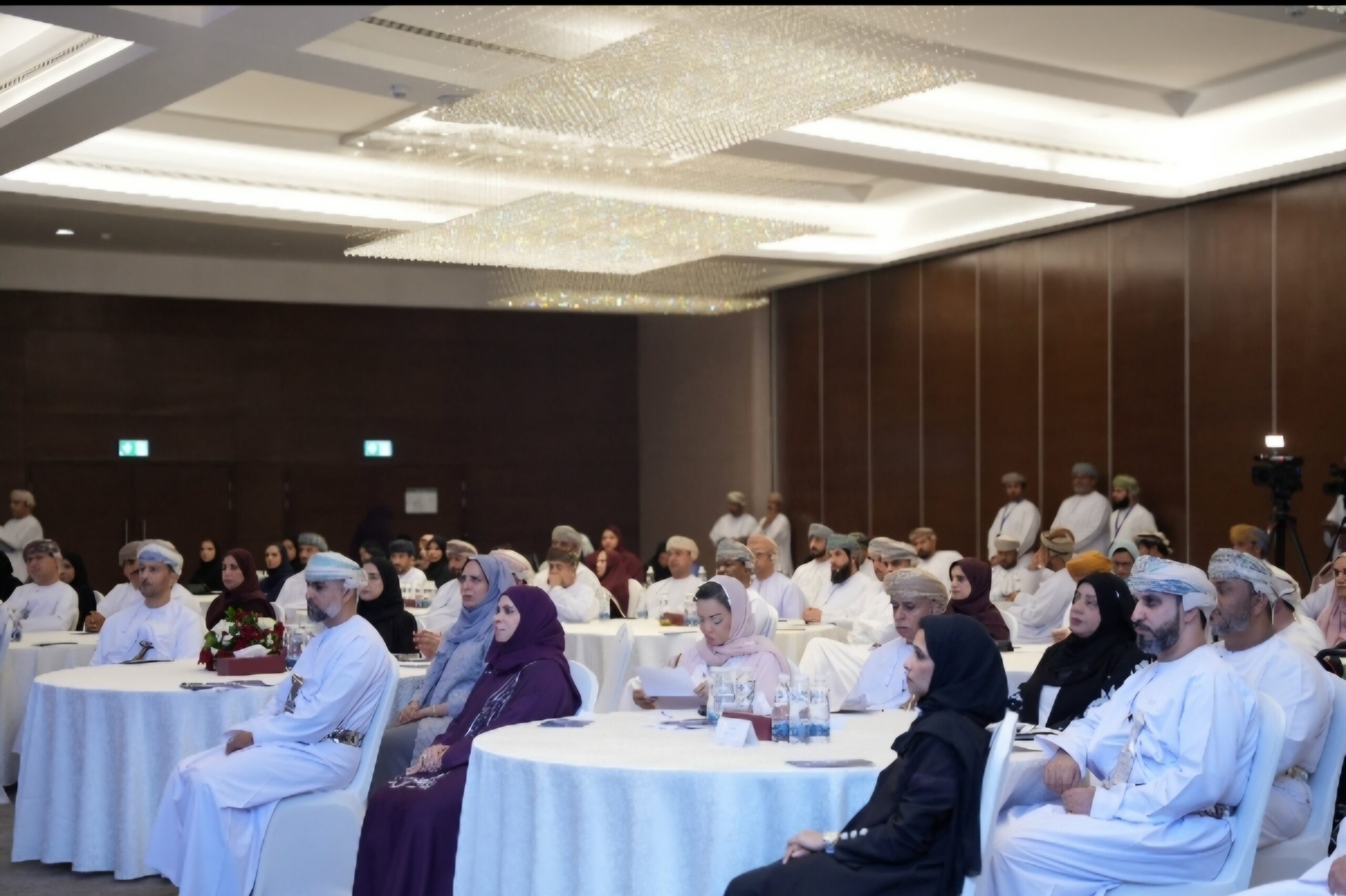

In his opening remarks, Professor Rashid bin Hamad Al-Balushi, Chairperson of the OHRC, welcomed the patron of the symposium and the attendees. He said that human rights in the Sultanate of Oman form part of a deeply rooted heritage shaped by generations of Omanis over thousands of years and woven into the country’s identity. He noted that human dignity has long guided Oman’s development and remains its ultimate goal.
The Chairperson traced several milestones in that heritage, beginning in the third millennium BCE, when Omanis built settled communities founded on organised cooperation, respect for property and the provision of social security. He then recalled the voluntary adoption of Islam by the people of Oman out of conviction, an episode commemorated in the words of the Prophet Muhammad: ‘Had you gone to the people of Oman, they would neither have insulted nor struck you.’ He explained how human rights principles shaped everyday life in Oman. He cited the equitable distribution of water through the aflaj irrigation system, the role of Omani charitable endowments (waqf) in providing education and healthcare and supporting widows and orphans, and the contribution of Omani fleets to promoting coexistence and peace and safeguarding freedom of navigation. These maritime links helped make Omani ports centres of cultural and religious diversity.
Professor Al-Balushi explained that, with the beginning of Oman’s Renaissance in 1970, these principles informed the building of a modern civil state. This transition was guided by the principle that people drive development and are its ultimate purpose. It culminated in the adoption of the Basic Statute of the State, which enshrined equality and prohibited discrimination. Oman also engaged with the international human rights system by acceding to United Nations conventions and instruments. He added that, under the wise leadership of His Majesty Sultan Haitham bin Tarik Oman is further strengthening governance and consolidating its institutions. Oman Vision 2040 places the ‘People and Society’ pillar among its highest priorities. Through this pillar, Oman seeks to uphold the dignity of older persons, support children, orphans and widows, safeguard the rights of persons with disabilities, and empower Omani women as full partners in development and decision-making. The Chairperson said the broad institutional participation in the symposium reflected a shared national responsibility to protect human rights.
The first session, moderated by Lawyer Saud bin Saleh Al-Mawali, Vice-Chairperson of the OHRC, examined ‘The Historical and Legislative Foundations of Human Rights in the Sultanate of Oman’ through three specialist papers. In the first paper, Dr Mohammed bin Hamad Al-Shuaili explored how Omani rulers and scholars upheld justice, tolerance across religious traditions and denominations, and judicial independence from the eras of the Imamate and the Nabhanid, Ya’aruba and Al Busaid dynasties through to the modern era. He also examined how the principles of peace and justice were enshrined in the Basic Statute of the State. Dr Salim bin Salman Al-Shukaili traced the development of Oman’s constitutional and legislative frameworks and corresponding changes to national laws, including legislation concerning children and persons with disabilities and amendments to the Penal Law.
Shatha bint Abdul Majeed Al-Zadjali, Director of the OHRC’s Department of International Organisations and Relations, reviewed Oman’s engagement with United Nations human rights treaties. She noted that by 2026 Oman had become a party to eight of the nine core international human rights treaties and had participated in four cycles of the Universal Periodic Review. She also discussed how the Commission’s independence had evolved under successive Royal Decrees and highlighted Oman’s candidacy for membership of the Human Rights Council in 2028.
The second session, ‘Human Rights in Practice in Contemporary Omani Society’, was moderated by OHRC member Lawyer Maimuna bint Said Al Sulaimani. In the first paper, the Honourable Sanaa bint Abdulrahman Al-Khanjari, a member of the State Council and Chairperson of the Board of the Al Rahma Association for Motherhood and Childhood Care, highlighted the role of civil society organisations in strengthening human rights protection. She linked Oman’s tradition of social solidarity to contemporary legislation supporting civil society, including the Law on Civil Society Institutions (64/2026) and the Law on the Rights of Persons with Disabilities (92/2025). She recommended strengthening partnerships and governance and expanding youth participation.
Dr Kawthar bint Thani Al-Khaifi, a strategic planning expert, examined the relationship between human rights and the Sustainable Development Goals, using the health priority under Oman Vision 2040 as a case study. She recommended establishing a unified national framework for human rights indicators that links treaty obligations with indicators for Oman Vision 2040 and the Sustainable Development Goals.
In the final paper, Makkiya bint Hassan Al-Kumzari traced advances in the rights of Omani women, from political participation to economic empowerment. She highlighted women’s representation in leadership roles, the allocation of 11 additional seats for women pursuant to Royal directives issued in June 2026, and significant gains under the Labour Law and the Social Protection Law. She recommended developing national programmes to build women’s leadership skills and support women’s innovation and entrepreneurship.
The symposium is expected to produce a set of recommendations and practical proposals. These are due to be announced and formally adopted at the Commission’s main Human Rights Day ceremony on 10 December 2026.