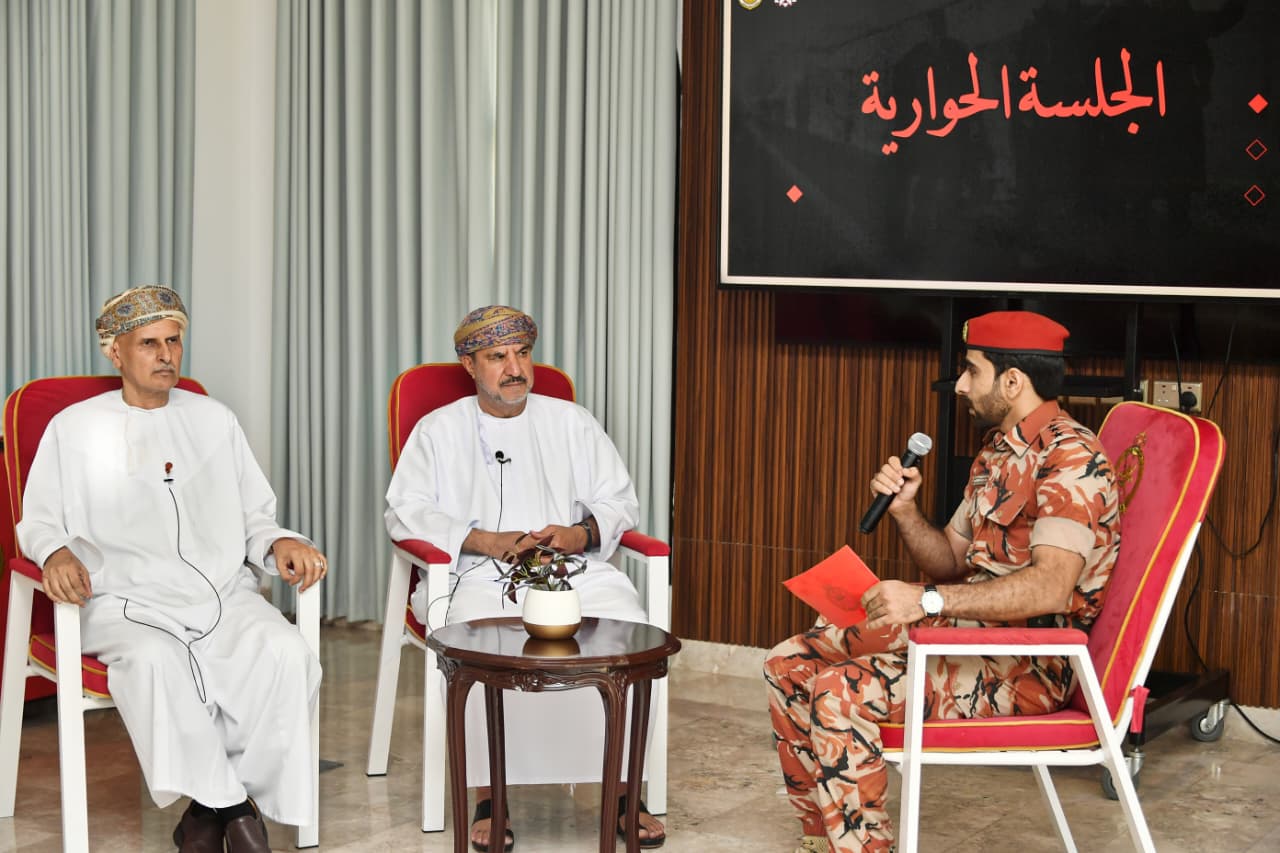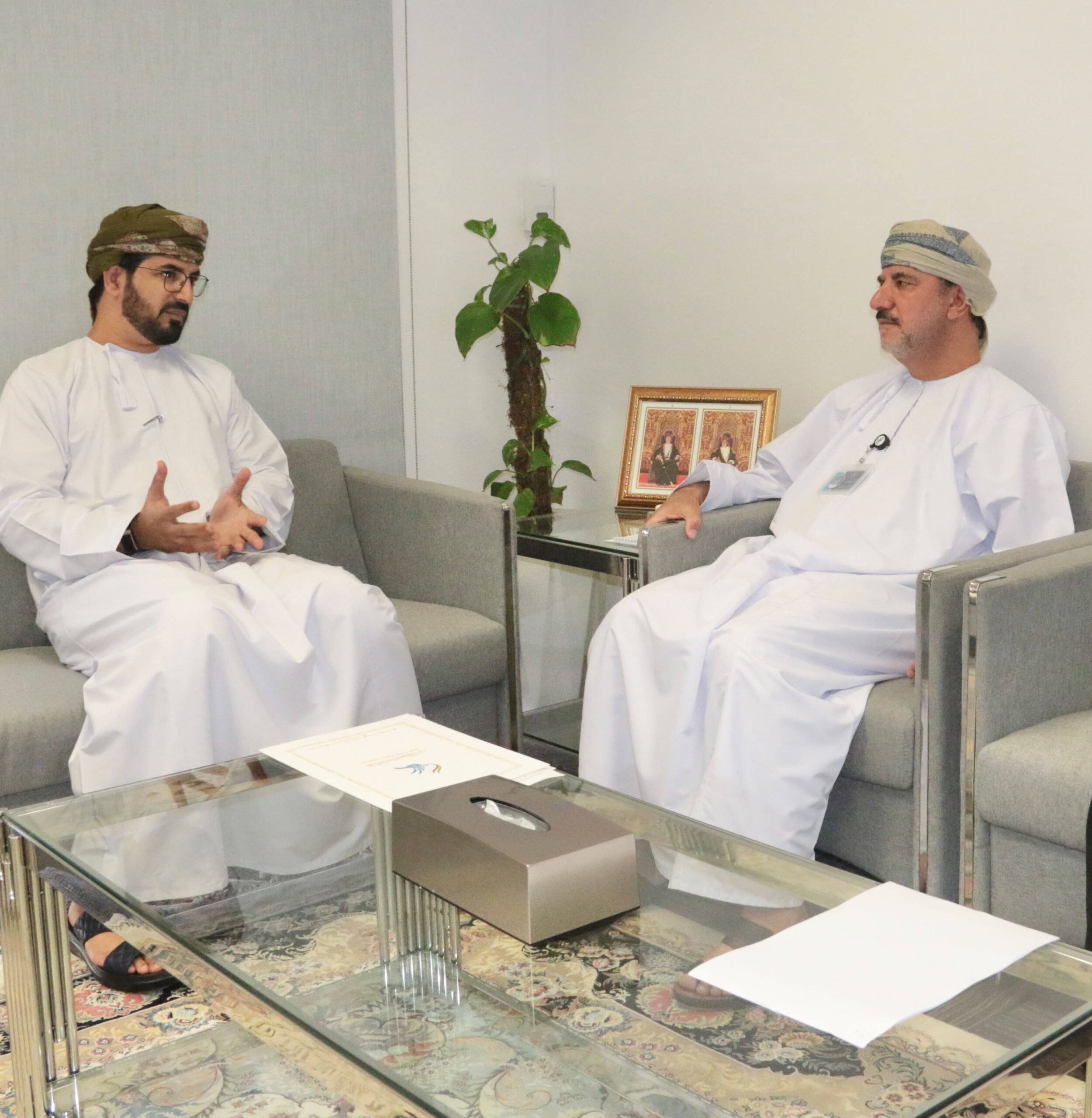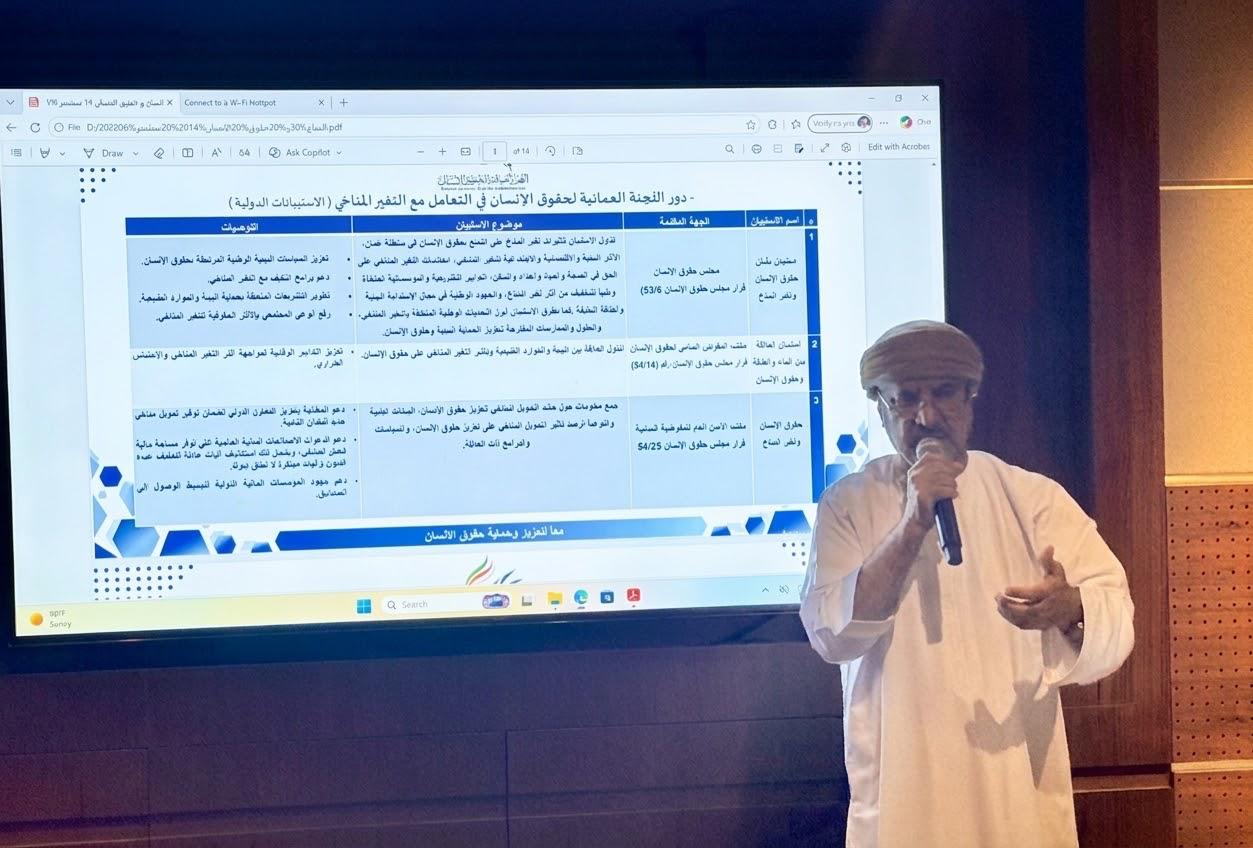



On the occasion of the Arab Human Rights Day, observed annually on 16 March, the Oman Human Rights Commission organized today a Seminar titled “Protecting Human Rights in the Digital Space and Artificial Intelligence,” under the patronage of His Excellency Dr. Yahya bin Nasser Al-Khusaibi, Undersecretary of the Ministry of Justice and Legal Affairs.
The Seminar aims to raise awareness about “digital rights” and the impact of artificial intelligence on the protection of personal data, as well as to reinforce the conviction within society that human rights safeguarded in the real world extend and must be equally respected and upheld in the digital sphere.
During the Seminar, the launch of the “Oman Human Rights Commission Project for Digital Transformation and Enhancing Beneficiary Experience through Artificial Intelligence” was announced. This represents a qualitative shift in the Commission’s operational system, as the project will provide smart, interactive communication channels enabling beneficiaries to access the Commission’s services, submit complaints, and receive consultations around the clock with ease and transparency. The new system will also accelerate the processing of complaints and analyze data to accurately monitor human rights indicators while ensuring the highest standards of privacy, thereby enabling faster and more effective responses to meet societal expectations.
In his remarks, His Excellency Dr. Saleh bin Yahya Al-Maskari, Head of the External Affairs Department at the Ministry of Foreign Affairs, stated:
“The Ministry plays an important role in supporting and strengthening international efforts aimed at protecting human rights in the digital space, through engagement with relevant international mechanisms, enhancing international cooperation and exchange of expertise, supporting national initiatives related to digital ethics, and monitoring rapid global developments in this field in a way that assists decision-makers and relevant institutions in keeping pace with transformations and formulating appropriate policies.”
He further noted that issues related to the protection of human rights are relatively new on the international stage, as rapid technological development has often outpaced legal and regulatory frameworks. This underscores the need to address these issues with a high degree of flexibility and a clear forward-looking vision that takes into account the nature of digital transformations and the challenges they impose.
In the same context, Prof. Rashid bin Hamad Al-Balushi, Chairman of the Oman Human Rights Commission, stated:
“Our commemoration of this occasion stems from the noble principles of the Basic Law of the State and aligns with the national orientations of Oman Vision 2040, which places digital transformation and innovation at the core of its priorities, while emphasizing that these technologies—particularly artificial intelligence—must serve as effective tools for human well-being, rather than instruments for violating privacy or undermining human dignity. The effectiveness of any National Human Rights Institution is measured by its adherence to the Paris Principles, foremost among them the principle of accessibility, which obliges us to facilitate individuals’ access to us.
From this standpoint, the Commission has undertaken to adopt artificial intelligence technologies to enhance accessibility, as we seek to harness these advanced technologies to become effective human rights tools that enable various groups to communicate with the Commission easily and efficiently.”
He added:
“The Commission recognizes that the sustainability of human rights work requires continuous adaptation to evolving developments and emerging technologies,” noting that the Commission recently participated in a specialized Seminar organized by the Arab Network for National Human Rights Institutions via videoconference, which was also dedicated to discussing “Artificial Intelligence and Human Rights,” with the aim of exchanging expertise and exploring the latest regional trends.
As part of this approach, the Oman Human Rights Commission will participate at the end of March in the meetings of the Global Alliance of National Human Rights Institutions in Geneva. It will also organize a side event at the Palais des Nations on 30 March under the title “Integrating Artificial Intelligence into the Work of National Human Rights Institutions in the Middle East.” This international event will witness the launch of an ambitious initiative to introduce an AI-powered digital identity for the Commission, as a further step toward promoting and protecting human rights in the Sultanate of Oman.
For his part, Counselor Jamal bin Salem Al-Nabhani, member of the Arab Charter on Human Rights Committee, explained that rapid developments are driven by the Fourth Industrial Revolution and the swift expansion in the use of information technology and artificial intelligence by individuals. He stressed the importance of ensuring that such use is governed by clear regulations, policies, and legislative tools capable of balancing individuals’ right to use these technologies with the need to prevent their misuse to harm others. This requires concerted efforts from all relevant entities within the legislative, educational, media, and cultural sectors to achieve the desired balance.
The Seminar featured three working papers. Hassan bin Fida Al-Lawati, Head of the National Program for Artificial Intelligence and Advanced Digital Technologies at the Ministry of Transport, Communications and Information Technology, presented a paper titled “The National Artificial Intelligence Agenda.” He emphasized the importance of adopting and localizing economic intelligence technologies to empower economic and development sectors, and governing their applications with a human-centered vision. He noted that the total number of initiatives and projects in this area has reached 32, with implementation timelines ranging from 2025 to 2027, and an achievement rate of 41% as of the end of 2025.
He further explained that several projects are under preparation and implementation, including the AI Studio, the Open Data Portal, the Omani Language Model, the Digital Triangle, the development of a dedicated AI zone, and the Green AI Alliance. He also highlighted sector-level initiatives, such as a pilot project for drone-based parcel delivery, another for digitizing transport sector documents in cooperation with Schlumberger Oman, the “Engineer It with AI” competition, the launch of the “AI Makers” initiative in collaboration with local universities, and the use of artificial intelligence in the “Intikhab” application. In the healthcare sector, AI applications include screening for diabetic retinopathy, as well as analyzing MRI scans and generating medical reports.
Abdulaziz bin Ali Al-Saadi, Director of the Legal Affairs Department at the Oman Human Rights Commission, presented a paper titled “Employing Artificial Intelligence Tools in the Work of National Human Rights Institutions.” He reviewed the practical framework for utilizing AI tools in monitoring and documenting human rights through the analysis of images, video footage, geospatial data, and satellite imagery, as well as tools for text and data analysis. These tools also support the reception of complaints, provision of human rights assistance, and preparation of human rights reports.
He explained that enhancing justice and access to law can be achieved through analytical comparison of judicial rulings, tools for analyzing and interpreting legal texts, and the provision of preliminary legal consultations. He highlighted their role in empowering various groups to access opportunities and have their voices heard within the justice system, as well as in analyzing demographic data, identifying age groups and geographical areas, and providing learning opportunities tailored to individual capabilities.
Another paper, titled “The Vision of the Oman Information Technology Society and Its Efforts to Align Artificial Intelligence Technologies with Human Rights Safeguards in the Digital Space,” was presented by Humaid bin Abdullah Al-Harasi, Director of the Sector Skills Unit for the ICT sector at the Oman Information Technology Society. The paper addressed the Society’s efforts to strengthen its national presence and institutional impact through raising awareness of digital rights, developing national policies, building specialized capacities, and consolidating principles of digital governance. He emphasized that ensuring the protection of human rights in the digital environment cannot be achieved solely through legislation and regulations, but also requires national competencies that possess both legal and technical understanding.